Books & Media · · 14 min read
Iain M. Banks and The Culture
Smashing the world requires only a hammer; building a better one requires imagination. A reflection on Iain M. Banks's Culture series and the contrarian act of imagining a future that works.
Photograph © Ken Reid
Iain M. Banks and The Culture
It is easy to picture the collapse of civilisation, drop a cast of characters into a grimy dystopia, and call it bracing, brutal and blunt. True novelty, building from the ground up, not relying on tropes or clichés, requires more than imagination: it requires deep empathy, a will to sit and truly consider potential paths for the future and their consequences, and how they would be felt across myriad dreamed-up civilizations. Iain M. Banks had the imagination and the skill to do so. Across nine novels (and a story collection) of the Culture, he did the contrarian thing: he sketched out a future that isn't dystopian (though there are dystopias in it), and had the nerve to suggest humanity might actually enjoy living in it.
The Culture is a post-scarcity, space-faring, anarchist society run by artificial intelligences. Not some overlord AI that decrees laws and demands subservience, but a loosely defined cohort of near-omniscient multi-dimensional intelligences that experience lifetimes per second. In our current era, these books provide what feels like a fresh look on AI. Decades of Hollywood have trained us to expect any sufficiently advanced machine to immediately reach for the extermination button, so Banks's Minds: sentient ships with names like Falling Outside The Normal Moral Constraints, So Much For Subtlety, Prosthetic Conscience, and Mistake Not…; read at first as a category error. They are vain, eccentric, occasionally petty, fiercely moral, and a great deal smarter than the humans they share the universe with. They keep biological people around because they find them interesting company, and they treat them as such.
Inside the Culture there is no money, no law, no property, no work that anyone is required to do, and no disease anyone is required to suffer (and most of these things are considered interesting curiosities of society that people choose to explore on whims). A reader trained on grim sci-fi tends to assume any such society must be dull - how can a utopia exist and be interesting? Removing material want does not abolish problems. The friction in the Culture novels lives at its edges, where this self-satisfied paradise rubs up against the hierarchical, exploitative civilisations that still infest the rest of the galaxy.
Quick jargon guide
- The Culture: A post-scarcity, space-faring, anarcho-communist society. No laws, no money, no property. Citizens do as they please.
- Minds: Hyper-intelligent AIs that run the Culture. They reside in massive spaceships and orbital habitats.
- Special Circumstances (SC): The Culture's moral black-ops division. They intervene in less developed civilizations to steer them away from fascism and self-destruction.
- Glanding: A biological modification that allows Culture citizens to secrete customized recreational or combat drugs on demand from engineered glands in their brains.
- Subliming: Leaving normal physical reality for a higher plane of existence. Think transcendence, but treated as a civilizational choice rather than a religious reward.
Living in the Culture
What seems to most upset the conservative reader of Banks is not the politics but the bodies. The Culture treats bodily autonomy as the obvious baseline of any civilised species. Citizens change sex on a whim. They drift from male to female and back, spend a few decades in between, settle nowhere in particular, and treat the whole question with the seriousness one might reserve for choosing a haircut. Pregnancy is opt-in and pauseable (as in, yes you're 3 months pregnant but want to try being male for awhile? Yep, no problem, just will it and your body will begin to change and keep that fetus in stasis till you're ready to continue - or not!). Polyamory is the default arrangement, monogamy a quaint preference. Queerness is not a category that does any useful work in the Culture; it is simply how people live. In fact, citizens (and even the AI) are not restrained to a fixed form of any kind, some become trees, animals, or multiple beings. Some transcend into another reality - but subliming is another kettle of fish. Suicide is also accepted, and normal, after a few centuries of existing and feeling done with it.

Every Culture citizen has a suite of engineered glands that synthesise, on demand, any recreational or medicinal drug they fancy: calm, snap, focal, drift, sober-up, the full pharmacy; with no comedown, no addiction, and no black market, because there is nothing to sell. The Drug War, with all its racialised carceral apparatus, does not exist in the Culture. You cannot run a prison industry around a substance everyone can secrete by thinking about it.
This is what makes the Culture series, for all its picnics and ship banter, subversive reading. Banks keeps showing you societies whose entire self-image is organised around scarcity, hierarchy, ownership, gender, race, and watching them shatter against a civilisation that has opted out of those categories. It is wonderful for making us examine our own societies and norms, and realize that the way we live is not the only way.

Every Culture book, briefly
Nine novels, one story collection, twenty-five years. Below is the whole sequence in the order Banks wrote it. The books do not require sequential reading; the universe is large enough that the chronology barely interacts with itself. Pick any one and start, though I'd suggest Player of Games as an introduction to The Culture, despite it being a book focused on a planet and society outside of The Culture itself.

Consider Phlebas (1987)
Banks's debut, and the only Culture novel told largely by someone who wants the Culture dead. Horza is a Changer, a shapeshifting mercenary, contracted by a fanatical religious empire to retrieve a fugitive Mind hiding on a forbidden planet. The Culture barely appears, but is consistently referenced. Banks focuses on the bigot and trusts the reader to notice that the bigot is wrong. A long, bleak chase across a galaxy at war, structured as negative space so you can see the shape of the thing the bigot is trying to destroy.
The only desire the Culture could not satisfy from within itself was one common to both the descendants of its original human stock and the machines they had (at however great a remove) brought into being: the urge not to feel useless.
The Player of Games (1988)
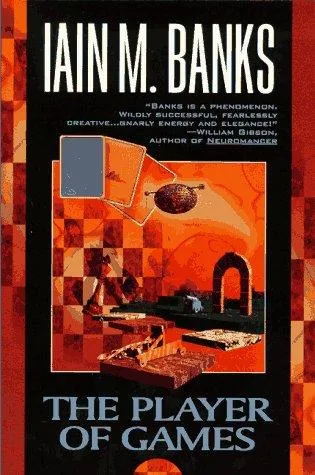
The sharpest political novel in the sequence, and the right place to start. Jernau Morat Gurgeh, a bored Culture games-player who has run out of opponents at home, is shipped off to the Empire of Azad, a stratified, racist, sexually brutal civilisation whose entire political hierarchy: emperor, ministers, judges, the lot; is decided by a single, vastly complex board game. Win well enough and you become Emperor; lose and you are nothing. Gurgeh arrives not with a fleet but with a different way of thinking, playing not as the Azadians do, defensively and hierarchically, treating every other player as a threat, but the way a Culture citizen plays anything: cooperatively, fluidly, treating pieces and people as ends rather than means. He wins, and in winning he exposes the empire as fragile. Banks's argument is that an egalitarian society is not merely morally preferable to a fascist one, it is strategically more dangerous. Cruelty calcifies; cooperation adapts. Also, the sexes and their societal roles in the Empire of Azad are rigidly defined, and fascinating: a trinary sexual system, yet are supremely bigoted with clear gender roles. Fascinating stuff.
A guilty system recognizes no innocents.
Use of Weapons (1990)
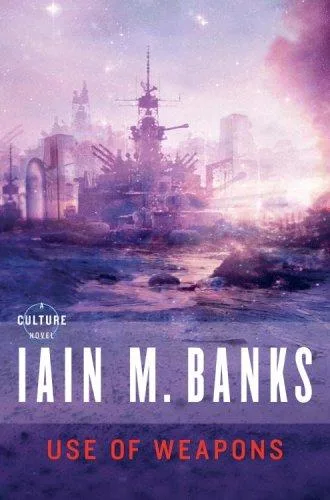
This is where the Culture's clean argument meets its dirty subcontractor. Special Circumstances is its morally compromised black-ops branch: the people willing to do the things a self-described utopia would rather not look at directly. They employ Cheradenine Zakalwe, a damaged ex-soldier from outside the Culture, to wage the proxy wars its own citizens would find distasteful; he is the hired knife. The structure is a literary fascination, and deeply confusing at first, before becoming a wonderful narration device. One chapter goes forward in time, then the next is from the "end" of the tale stepping backwards. They collide on a single, unforgivable image, and it's one of the cruellest tricks in modern sci-fi, and one of the few formal experiments that earns its payoff. The answer to whether a moral act stays moral after enough layers of subcontract arrives in the last three pages, and Banks never sentimentalises the people who clean the geopolitical toilets: Special Circumstances is not the noble exception to the Culture's ethics, it is the cost of them.
The bomb lives only as it is falling.
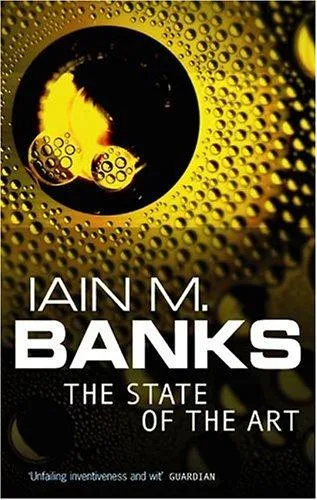
The State of the Art (1991)
A novella plus a handful of short stories. It's based on Earth, unlike most of the other Culture novels. A Culture survey ship arrives in Earth orbit in 1977 and watches the Minds debate whether to make contact. They decide against. The reasoning, delivered in cool diplomatic prose, is a fair but damning assessment of humanity. The shortest and easiest entry into the universe if you want a single sitting and a bad night's sleep afterwards.
What's one more meaningless act of violence on that zoo of a planet? It would be appropriate. When in Rome; burn it.
Excession (1996)
This one is particularly memorable, because the all-powerful end-of-the-technology-research-tree civilization is flummoxed by an out of context problem. A perfectly black sphere appears in deep space, older than the universe: an Outside Context Problem, the thing your worldview was not built to accommodate, the kind of threat a civilisation tends to meet about as well as a sentence meets a full stop. The Minds spend the entire book messaging each other about it in coded snark, mostly via group chat, while the squid-shaped, sadistic, deeply misogynist Affront try to start a war not realizing how absolutely screwed they are / are going to be. The biological cast barely matters; the chat log is the plot. It is also the book where a character lets a pregnancy hang in stasis for the better part of forty years because the timing was inconvenient. Easily the funniest of the Culture novels, and the one in which Banks is most obviously showing off. The Sleeper Service is one of the great characters in the genre, and the Sleeper Service is a ship.
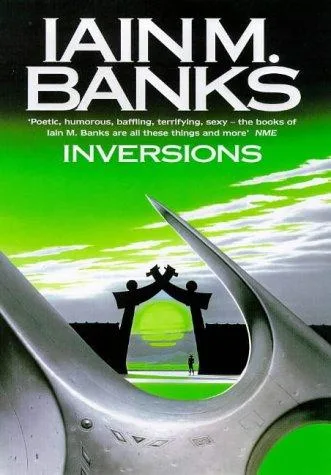
Inversions (1998)
Two physicians on a feudal planet, in two warring kingdoms, treating their respective kings, each one a Culture agent who never says so out loud. The word "Culture" never appears in the book. Banks writes a Culture novel by refusing to write one and lets you watch a society fail to imagine its own salvation while that salvation is standing right there with a first aid kit. The least typical entry in the sequence, and worth reading if you are binging the whole series.
Patience can be a means of letting matters mature to a proper state for action, not just a way of letting time slip away.
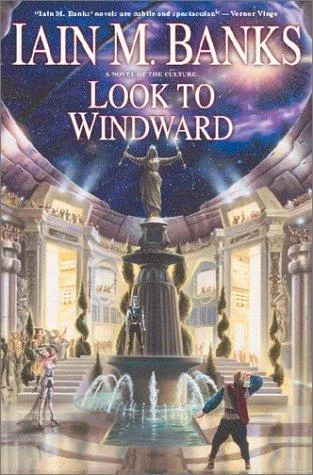
Look to Windward (2000)
Mahrai Ziller, a Chelgrian composer in self-imposed exile on a Culture orbital, prepares a symphony to mark the moment when the light from an eight-hundred-year-old war crime finally arrives in the sky. Meanwhile, his own civilisation sends an assassin after him. The book is what happens when an intervention goes wrong: who pays, who remembers, and a long look at grief from the perspective of a caretaker, carer and a sentient artificial planet. The most elegiac book Banks wrote, written as a deliberate companion piece to Consider Phlebas.
[I]f I suffered only one fool gladly, I assure you it would be you.
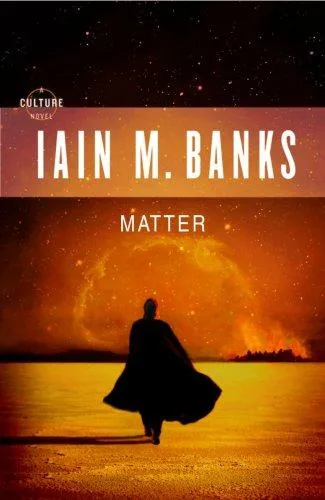
Matter (2008)
A Shellworld: one of those impossible artefacts left by a dead civilisation, layers of habitable strata stacked inside a single planet like an onion the size of a gas giant. A king is murdered. One son flees, one is groomed for the throne, and the daughter who left it all to join the Culture comes home for the funeral. Three siblings climb the same staircase from three different directions, none of them realising that the staircase itself is the threat. Slower-paced, deeply lived-in, and the most fantasy-shaped of the Culture novels, which is to say there was a bit too much fantasy in this for my sci-fi, but still worth reading.
War, famine, disease, genocide. Death, in a million different forms, often painful and protracted for the poor individual wretches involved. What god would so arrange the universe to predispose its creations to experience such suffering, or be the cause of it in others?
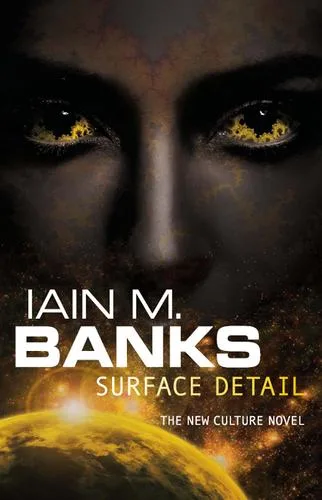
Surface Detail (2010)
Banks took the Culture's argument about bodily autonomy to its hardest case here. Virtual Hells: simulated afterlives in which the digitised dead are tortured forever for the moral edification of the living. A war is being fought over them inside the simulations, by treaty, on the understanding that nobody escalates into the real. Then somebody escalates into the real. Lededje Y'breq, a tattooed slave murdered on page one, wakes up on a Culture ship and goes home with revenge on her mind. The Culture, with the polite firmness of a society that has thought about this for a very, very long time, is against the Hells; the book is the most direct fictional argument I know of against the idea that consciousness can be owned by anyone but the person doing the conscious-ing. Features Demeisen, the avatar of the warship Falling Outside The Normal Moral Constraints, who has carved his own bones for fun and remains the most charming sociopath Banks ever wrote.
All you ever were was a piece of the universe thinking to itself.
The Hydrogen Sonata (2012)
The Gzilt, an ancient civilisation older than the Culture itself, are days away from Subliming: uploading themselves wholesale into a higher dimension, rapture with better physics. On the eve of departure, an inconvenient piece of evidence surfaces about how their founding scripture was actually written. Vyr Cossont, an amateur musician on an instrument designed to be unplayable, gets pulled into the cover-up. Banks's last Culture novel.
One should never mistake pattern for meaning.
Nine novels and one short-story collection, published 1987–2012. Banks died in 2013. There will be no more, and that is such a major loss. I remember being devastated hearing of his loss. It's strange how we can feel connected to people we've never met, who are already dead, through their writing.

The other Banks
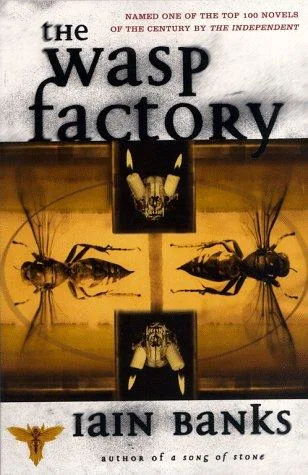
Outside the Culture, there is another writer with almost the same name. Banks published his literary fiction as Iain Banks and his science fiction as Iain M. Banks: the middle initial a small flag warning the bookseller which shelf you were on. He always claimed it was his publisher's idea and that he found it silly.
The literary novels are worth the detour. The Wasp Factory (1984), his debut, is the most upsetting first novel in modern British fiction and the book that made his name; reviewers in 1984 split roughly down the middle between calling it a masterpiece and demanding it be withdrawn from sale. The Bridge (1986) is his strangest, a man in a coma constructing an entire civilisation on the rail bridge across the Forth. The Crow Road (1992) is his warmest, a Scottish family saga that opens with the line "It was the day my grandmother exploded" and somehow earns it. Complicity (1993) is a journalist thriller with a serial killer doing the things the journalist only writes about. The Quarry (2013), his last book, was finished while Banks himself was dying of the same cancer he had just given the protagonist's father; he never read the finished copy.
The literary novels are full of arguments the Culture would recognise: about cruelty, about Scottish class, about who gets to write the official version of a life; and the SF novels would, with a different cover and a different vocabulary, sit happily on the literary-fiction shelf.
Reading Banks now
The Peter Kenny audio editions are worth the price. Kenny voices the Minds as if they are old friends he has been waiting years to introduce you to, and the ship names are pronounced so well, it's an absurdly difficult task narrating some of these books but Kenny does it so damn well. I've written elsewhere about audiobooks being real reading; the Culture is one of the strongest cases for the form.
Banks died in 2013, shortly after announcing his cancer diagnosis. He left the Culture sequence at ten books. It is fashionable to read sci-fi for its warnings; Banks is one of the few writers worth reading for his offers. The barrier between us and a civilisation like the one in these books is neither technological nor biological, and never has been. It is a failure of nerve, willingness for extreme empathy amongst minds, regardless of biological, or non-biological shape, gender, sex, or orientation, and Banks spent a career showing how it could be done.
Common questions
Where do I start with the Culture series?
Skip the first published book, Consider Phlebas, for now. Start with The Player of Games: it is tightly plotted, moves quickly, and asks the least of a newcomer while still showing you everything the Culture believes. Once it has its hooks in you, the order barely matters.
Do I need to read them in order?
No. The books are set in the same universe but span hundreds of years and feature entirely different casts of characters. You can read them in any order, though reading Consider Phlebas before Look to Windward adds thematic resonance.
Is it hard sci-fi?
It is grand, unapologetic space opera. Banks cares more about sociology, morality, and geopolitical philosophy than he does about explaining the physics of faster-than-light travel. The technology is practically magic, allowing him to focus on the human (and AI) condition.