Books & Media · · 14 min read
The Books I Recommend to Friends
The thirteen books I actually push on friends, grouped by the kind of friend I'd press them into the hands of.
Photograph © Ken Reid
The Books I Recommend to Friends
When a friend asks what they should read next, I try not to hand them some generic "best books ever" list. I think about the person. Some want a story to disappear into for a weekend. Some want a book that leaves them rattled. Some want something that makes the world feel bigger and less tidy than it did the day before, and others want to feel what others have felt, to walk in someone else's shoes.
I end up recommending many of the same titles, despite my best efforts. Every book here got five stars from me on Goodreads, but stars are a poor signal on their own - I've written about why rating systems are broken elsewhere. The useful question is not "is this good?" but "good for who?"
Quick jargon guide
- Post-scarcity: A society where basic needs are met so reliably that survival is no longer the main economic problem for most people.
- LitRPG: Fiction that uses game mechanics like levels, stats, classes, and loot as part of the story world.
- Fermi paradox: The puzzle of why we have not seen clear evidence of alien civilizations despite the huge size and age of the universe.
- Dark Forest hypothesis: The idea that advanced civilizations stay silent or strike first because revealing themselves in a hostile universe could be fatal.
For the friend who needs to disappear into a story
These are the books I hand to people who tell me they haven't read fiction since school, or who've been grinding through a hard year and need somewhere else to be for a while.
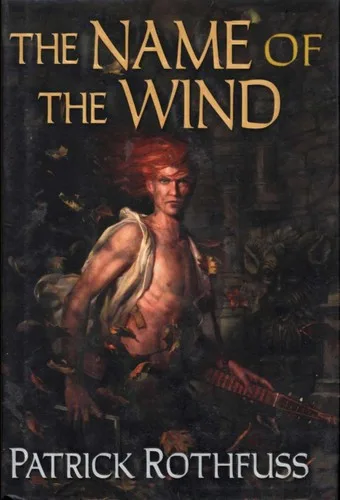
The Name of the Wind - Patrick Rothfuss
A red-haired boy who grows up in a travelling troupe of performers, watches his family die, scrapes through years on the street, and eventually talks his way into an arcane university. He becomes a living legend, and then he becomes an innkeeper in a town no one has heard of, telling his own story to a scribe over three days. You learn the ending of the trilogy before learning how it started, and you're left feeling very curious, making it a real page turner.
Rothfuss writes prose that makes other authors envious. The pacing is unhurried in a way that modern series rarely permit themselves, and it's wonderful.
"It's like everyone tells a story about themselves inside their own head. Always. All the time. That story makes you what you are. We build ourselves out of that story."
- Patrick Rothfuss, The Name of the Wind
The third book, however, has been promised for years and has not arrived. If your friend is the kind of person who needs a series finished, warn them. If they're happy to read two excellent books and live with an open ending, hand it over with but a warning. I've written more about the wait and what it costs in fifteen years of silence on the doors of stone.
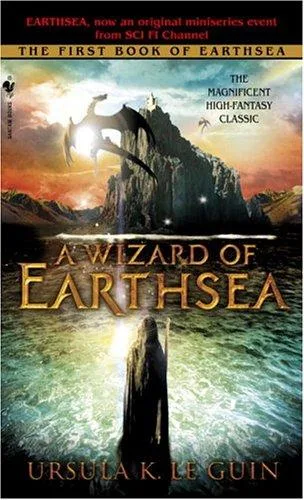
A Wizard of Earthsea - Ursula K. Le Guin
Le Guin is another master of fantasy. In this short book she wrote in 1969, about a boy with magical talent who lets pride get the better of him and looses something terrible into the world, you will find a slow, contemplative narrative that was novel and is rare. Most of the story is him chasing something across an archipelago, trying to learn what it is.
Le Guin writes with a spare precision that makes most fantasy feel inflated by comparison, because unlike many others, there's no map of evil empires to defeat. There's a young man making a mistake, growing up, and being asked to face the consequence with his real name. It's an antidote to the doorstop fantasy that has dominated the genre since. Each sentence feels deliberate and carefully crafted, so savor it.
"Only in silence the word, only in dark the light, only in dying life: bright the hawk's flight on the empty sky."
- Ursula K. Le Guin, A Wizard of Earthsea
Good for adults; good for any kid old enough to read it.
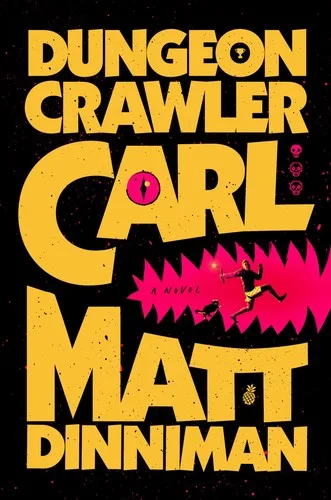
Dungeon Crawler Carl - Matt Dinniman
Now for something completely different. DCC is the literary equivalent of a kids cartoon that you expect to be goofy and irritating, and is instead hilarious and surprisingly poignant and touching. The Earth's buildings collapse into a galactic game show. Carl, a former coast guard sailor in his boxer shorts, and Princess Donut, his ex-girlfriend's show cat, end up as contestants. It is a ridiculous premise. In practice it's one of the most emotionally touching serious series I've read in years, wrapped in absurd packaging.
I've written a whole post on what makes it work in Dungeon Crawler Carl and the strange dignity of LitRPG, so I won't repeat the argument here. Short version: Dinniman writes characters who lose people and feel it, and the genre norms end up carrying weight that's not visible from the cover (a talking sex doll head and I'm calling the series dignifying, where did I lose my mind?).
"And I was so stupid, because I thought since I loved you, that meant you loved me."
- Matt Dinniman, The Butcher's Masquerade
If you can get it on audiobook with Jeff Hays narrating, do. He performs every character distinctly and the production sells the comedy and the grief in equal measure.
For the friend who wants their brain rewired
Science fiction at its best does something philosophy struggles to do: it makes an idea felt rather than argued. These books changed how I think about civilisation, language, and what it means to share a galaxy (and, unwrapping that metaphor, our planet) with anyone else.
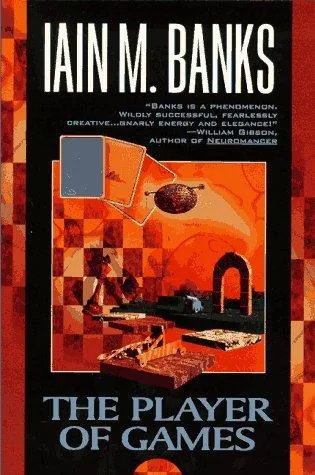
The Player of Games - Iain M. Banks
The Culture is a post-scarcity, mostly-benign, AI-run civilisation that does not have to work, fight, or want for anything. Banks spent ten novels exploring what such a society does with itself, and how it interacts with civilisations that don't share its values. Player of Games is the easiest door into the series: a single game-player (think chess, not Fortnite) is sent to a brutal, hierarchical empire built around one extraordinarily complex board game, and asked to compete.
The book is ultimately an argument about political systems. The game in the empire of Azad is the empire itself. How you play reveals what you believe about power, hierarchy, and who deserves what. Banks lets the protagonist work it out without ever lecturing the reader.
"The bomb lives only as it is falling."
- Iain M. Banks, Use of Weapons
If your friend likes it, the rest of the Culture series is waiting. Use of Weapons and Excession are the ones I push next, and the series really doesn't need to be read sequentially. The audiobook versions are amazing, Peter Kenny (who is super responsive and kind, I've chatted with him on what was once Twitter) narrates them brilliantly.
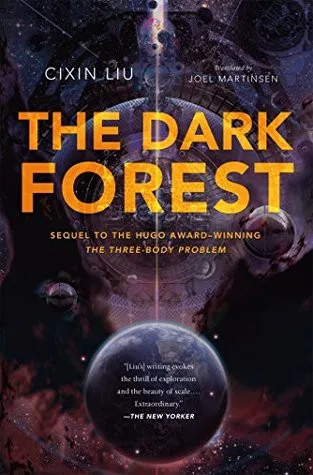
The Dark Forest - Liu Cixin
You have to read The Three-Body Problem first, but The Dark Forest is the real thrill of the series. This is where the trilogy stops being a thriller about alien contact and becomes a cosmological argument about why the universe is silent.
Liu's answer, the dark forest hypothesis, is one of the most disquieting ideas I've encountered in fiction. It reframes the Fermi paradox as a survival problem and makes a strong case that the silence is a feature rather than a bug. I have had many late night chats with interesting people who have been similarly unsettled by it.
"The universe is a dark forest. Every civilization is an armed hunter stalking through the trees like a ghost, gently pushing aside branches that block the path and trying to tread without sound. Even breathing is done with care."
- Liu Cixin, The Dark Forest
Recommend the whole trilogy as a unit. Death's End finishes the arc on a temporal scale that breaks your brain.
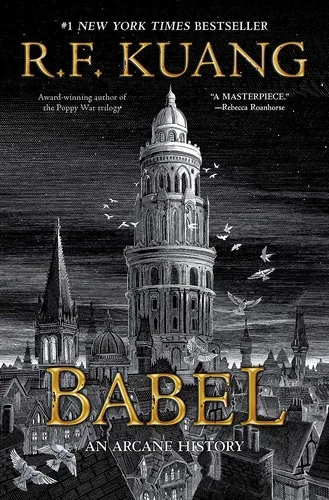
Babel - R.F. Kuang
I'm currently reading this with my partner, and we have been slowly savoring it. I read it when it first came out and I love it so much. An alternate-history nineteenth-century Oxford in which translation is literally magical: silver bars engraved with paired words in different languages produce real-world effects from the meaning lost between them. The British Empire runs on this and the book is about the human cost.
It's a novel about translation, colonialism, complicity, and what it means to be made useful to a system that steadily destroys the place you came from. Kuang is angry and the book does not hide it.
"This is how colonialism works. It convinces us that the fallout from resistance is entirely our fault, that the immoral choice is resistance itself rather than the circumstances that demanded it."
- R.F. Kuang, Babel
Give it to the friend who loved His Dark Materials as a teenager and is ready for a darker version of the same Oxford air.
If the friend you're buying for doesn't want fiction at all, these are the two non-fiction books I default to. I went deeper on both in why most self-help books are trash, but the short version is simple: they respect the reader and show their working.
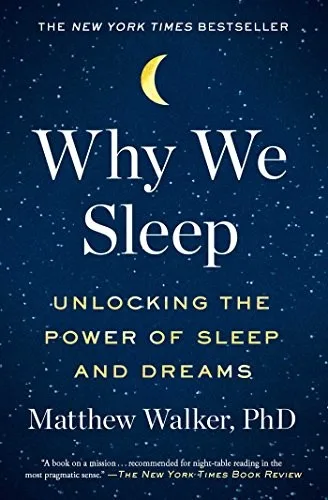
Why We Sleep - Matthew Walker
The most behaviour-changing book I've read. Walker, a sleep researcher at Berkeley, makes the case that sleep deprivation is a public health emergency we treat as a personal failing. The evidence base is broad, the writing is plain, and the conclusions are not softened.
"Practice does not make perfect. It is practice, followed by a night of sleep, that leads to perfection."
- Matthew Walker, Why We Sleep
Main takeaways:
- Sleep is not a luxury, it is a foundational requirement for your brain. Cut it for long enough and your mood, focus, and health (across the board) all start to degrade.
- Learning does not end when practice stops. The night after practice is when memory and skill consolidation do the real work.
- You can sleep more easily with routines and simple rituals.
Some of Walker's specific statistical claims have been challenged, most prominently by Alexey Guzey but the central argument survives the criticism. If your friend is not stubborn, and wants to improve their health, fitness and cognitive ability, this is a great read.
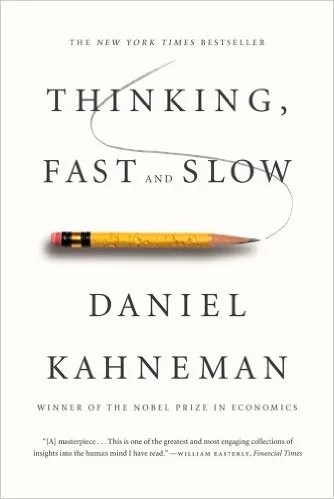
Thinking, Fast and Slow - Daniel Kahneman
Kahneman won the Nobel Prize in Economics for work on how human judgement actually behaves, and this is his accessible summary. System 1 and System 2 thinking, anchoring, loss aversion, the planning fallacy - this is the source material that every productivity blogger wishes they could condense into a 30 second TikTok.
"A reliable way to make people believe in falsehoods is frequent repetition, because familiarity is not easily distinguished from truth."
- Daniel Kahneman, Thinking, Fast and Slow
It's long and so worth it. Recommend it with the warning that the middle is denser than the start, and that the reader is allowed to skim chapters.
For the friend who's never been deeply devastated by a book
These are the two I send when someone wants to feel something and isn't afraid of a book that doesn't end happily, to say the least. They're not punishing reads. They're small and sharp, and they stay in your head and linger, for good or ill.

Stoner - John Williams
Spoiler alert: Stoner was published in 1965. The plot sounds egregiously dull: a farm boy goes to university, becomes a professor of English at the University of Missouri, marries badly, teaches, fails to be recognised, dies. That's the book, and somehow it hits like a freight train, because it captures the profound in the mundane, and the utter depressiveness of ordinary life.
What Williams does with that life is extraordinary. The prose is straight-forward and doesn't lean on heavy metaphor or ornamentation, it uses simple brush strokes to paint a vivid picture. By the end you have lived a man's whole life with him, judging him, understanding him, and feeling the weight of his choices, and eventually feel his loss.
"He was forty-two years old, and he could see nothing before him that he wished to enjoy and little behind him that he cared to remember."
- John Williams, Stoner
I recommend this to everyone, age is irrelevant, I think it can help you consider your own mortality and the shared sadness privilege does not save anyone from.
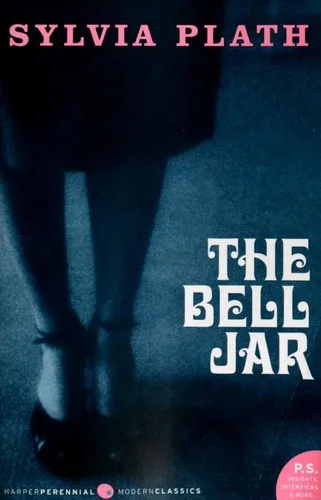
The Bell Jar - Sylvia Plath
I first read Plath in Glenrothes High School for Higher English class. Her poetry explores a form of depression accessible to all but especially clear to women. This is Plath's only novel, semi-autobiographical, published a month before her suicide. A bright young woman in 1950s America wins a summer magazine internship in New York, comes home, and slowly comes apart.
The book is unflinching about depression in a way that is somehow both blunt and elegant. It's also very funny in places, in the dry, observational way that people with severe depression often are in person. Plath is not asking for sympathy; she's describing what it's like to be inside the jar.
"because wherever I sat, on the deck of a ship or at a street café in Paris or Bangkok, I would be sitting under the same glass bell jar, stewing in my own sour air."
- Sylvia Plath, The Bell Jar
Recommend with care. For the right reader at the right time it's a moving experience. For someone in the middle of their own crisis it can be a hard read. Worth knowing your friend before pressing it on them.
For the friend who wants to be reminded the world is bigger and messier than this
Three works of non-fiction about the real world, each will make you uncomfortable in different ways. To me this is important in reading, expanding our mental boundaries. If you don't feel a little uncomfortable, you are not growing.
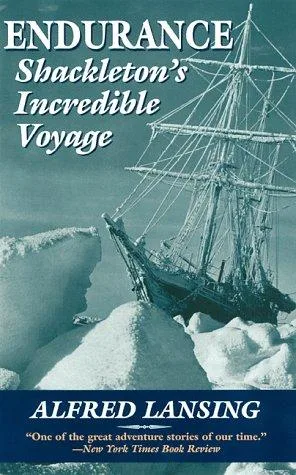
Endurance: Shackleton's Incredible Voyage - Alfred Lansing
Spoiler alert: 1914. There was a surge of exploration frenzy, funded often by governments and colleges, for prestige, glory and discovery. Shackleton's ship gets locked in Antarctic pack ice, drifts for months, is crushed, and sinks. Twenty-eight men spend the next year and a half on the ice and in open boats, in deadly conditions, yet none die. It's a story of complete and utter failure, but it's also a story about, as you might have guessed, endurance beyond anything imaginable.
Lansing wrote the definitive account in 1959 using the survivors' diaries and interviews. It reads like a thriller: the decisions, the failures, the small mercies, the eight-hundred-mile open-boat crossing of the Southern Ocean - if a novelist invented this story you would put the book down for being implausible. Warning: animal death.
"In some ways they had come to know themselves better. In this lonely world of ice and emptiness, they had achieved at least a limited kind of contentment. They had been tested and found not wanting."
- Alfred Lansing, Endurance: Shackleton's Incredible Voyage
I recommend this to anyone who thinks they've had a bad week.
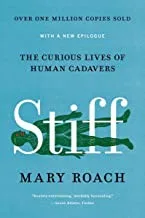
Stiff: The Curious Lives of Human Cadavers - Mary Roach
What happens to a body after you donate it to science. Roach goes to medical schools, crash-test facilities, decomposition research stations, and a plastic surgery practice training course, and writes about all of it with curiosity and respect and the kind of comic timing that defuses material that would otherwise be unreadable.
"You are a person and then you cease to be a person, and a cadaver takes your place."
- Mary Roach, Stiff
The book is also an argument for body donation, and does a good job of laying out the benefits and ethical considerations involved.
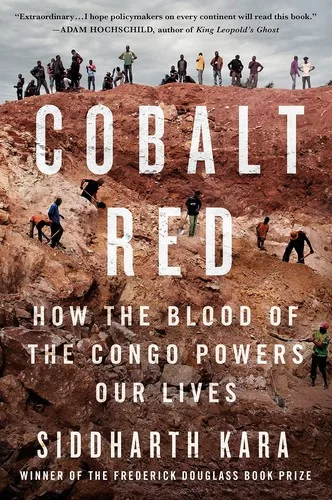
Cobalt Red - Siddharth Kara
Roughly three quarters of the world's cobalt comes from the Democratic Republic of the Congo, much of it from artisanal mining done by hand, often by children, in conditions that kill people in slow and sudden ways. Cobalt is in the battery of every laptop and phone and EV. Kara spent years in the DRC documenting the supply chain at the source.
It is a depressing reality, and you feel a little of their reality by reading it. It's also not preachy. Kara names people, names companies, names the chain of buyers, smelters, and brands that absorb the metal with little scrutiny. I wrote about giving a presentation on this material in the hidden cost of cobalt; the book is the source of my learning.
"Now you understand how people like us work?
- Siddharth Kara, Cobalt Red
'I believe so.'
'Tell me.'
'You work in horrible conditions and, '
'No! We work in our graves.'"
If you use a phone, you should read this, to truly understand your privilege.
A final note
Please send me your recommendations, based on these. You can find my details below, I love adding to my to-read list.
Common questions
Why no non-fiction picks beyond Walker, Kahneman, Lansing, Roach and Kara?
These are the ones I find myself recommending most. I read plenty more, but a lot of non-fiction is good without being something I'd press into a friend's hands. The bar for recommending is higher than the bar for enjoying.
Where are the classics?
I am recommending these based on my preferences. I enjoy some classics but they don't fit into this list.
What about audiobooks?
Many of these work beautifully read aloud. Dungeon Crawler Carl is arguably better that way. I've made the case for audiobooks separately in in defense of audiobooks.
Are these in order of preference?
No. They're grouped by the kind of reader I'd hand them to. Ranking them against each other would be the wrong exercise.