Books & Media · · 9 min read
Why Most Self-Help Books Are Trash (And Which Ones Aren't)
The bad ones are blog posts stretched to 300 pages. The good ones cite their sources. Here's how to tell the difference.
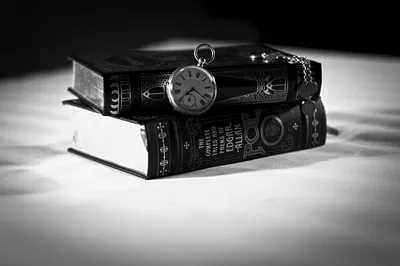
Photograph © Ken Reid
Why Most Self-Help Books Are Trash (And Which Ones Aren't)
Bad self-help books are blog posts stretched to 300 pages, with 250 pages dedicated to iterating on some rewrite of "this strategy helped me, and it will help you!"
I've read a lot of self-help books. I love the idea of them! After all, therapy is expensive, and conversations on topics like anxiety or productivity too often circle around the same tropes. Most of these books leave you feeling like you've spent hours failing to find wisdom amongst filler. I think there's a dividing line in this genre, and it became apparent when I reviewed my own Goodreads ratings.
Quick jargon guide
- Anecdotal: based mostly on personal stories, not wider evidence.
- Peer-reviewed: research checked by other experts before it is published.
- Framework: a structured way of thinking about a problem, not proof that the idea is true.
- Bibliography: the list of books, studies, or sources an author uses to support their claims.
- Rigour: how careful, specific, and evidence-based an argument is.
The ones that wasted my time
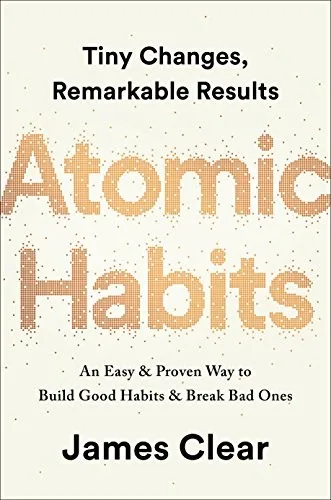
Atomic Habits — James Clear ★★
The core idea is solid. Habits are built through cues, cravings, responses, and rewards. Make good behaviours easier and bad ones harder. Stack habits. Start small and build up compounds from your molecules.
This concept can be summarized in a sentence, and fully described with examples in about 2,000 words of actual content. The book, however, is 320 pages.
It's almost all padding: anecdotes about athletes, repeated restatements of the same framework, and the kind of motivational filler that belongs in a company newsletter that won't stop telling you about "company culture". Atomic Habits is a very good blog post that was padded into a book because books sell better than blog posts. It would be better suited to an email digest: five ideas, five minutes, done. Which is what the author originally did, by the way, before deciding to write a book.
James Clear(ly) knows his material. The format is doing him no favours (well, he made stacks of cash, but it's doing the readers few favors).
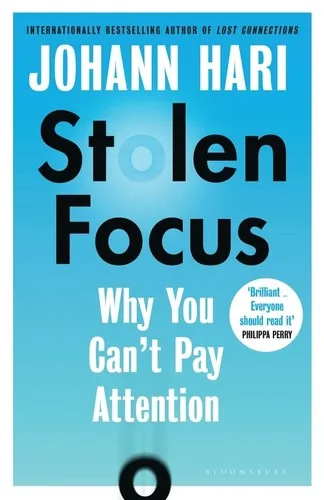
Stolen Focus — Johann Hari ★
I'm a proponent of the general concept. Our attention spans have been considerably shortened like a kid preferring simple sugary treats over complex carbohydrate meals. So I jumped in expecting to hear some solid advice about shoring up one's mental fortitude against the invasion of dopamine-hitting content (e.g. TikTok, YouTube shorts, Bluesky and X). I had real hopes for it.
Early in the book, Hari describes a formative incident where he noticed he couldn't put down his iPad, and from there launches into a sweeping argument that we're experiencing an unprecedented civilisational attention crisis. His iPad. That's the anchor data point. He then anecdotally prescribes everything he views around him in his friends, family and strangers as problematic. Where is the nuance? Where is the science? A few studies were referenced but, my guy, you aren't convincing me on your point, you're convincing me that you're a dogmatic ideologue.
What follows is a series of interviews with experts mixed with Hari's personal narrative, all building toward conclusions that aren't supported by the rigour required to justify them. There's a meaningful conversation to be had about attention, phones, and modern life. This book doesn't have it.
Lastly, here's what I originally put in my Goodreads review:
From the book:
"look hun, if you swipe left the screen goes left. If you swipe right, the screen goes right"
I crouch down and say to the man, "you can also do it the old fashioned way and look left, then turn your head, and look right!"
My review:
This is the most insufferable pretentious book I've had the ill conceived idea to read. It makes me gag at the cringey points.
Yes, screens can steal away our attention and can cause a loss of focus, but they're also a portal to the collected knowledge of all humankind. For God's sake, this very book is available on Kindle.
Count me firmly on the "it's a tool, and up to us to manage our own (and children's) screen time, and what we do with our screens" side, rather than the "screen = bad" crowd.
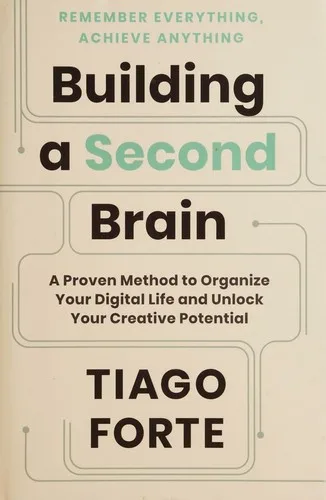
Building a Second Brain — Tiago Forte ★★★
This one is more useful than the others and gets three stars for actually containing practical content: the PARA system (Projects, Areas, Resources, Archives) is a decent framework for organising notes and tasks.
But the whole operational substance of PARA could fit on a single A4 page. Front and back if you wanted to provide an example structure, or a directory listing.
The bulk of the book is scaffolding: justifications for why you need a second brain, stories of how the second brain changed lives, philosophical framing that circles the drain around four actual ideas. Forte clearly built something that works for him, and the system is worth knowing about. It just didn't need 270 pages to explain it. But you can't sell an A4 page and call it a book.
The ones that changed how I think
Bad books are built on assertion. Someone experienced something, or interviewed some people, or synthesised some other books, and then wrote their conclusions as though they're established truth through personal anecdote.
The good ones cite sources. They show their working. When they make a claim, they point to research, they're upfront when the research is limited and they consider opposing viewpoints. That is when your content can actually fill a book and provide true justification for being in a bound format.
The three best self-help books I've read all share this quality.
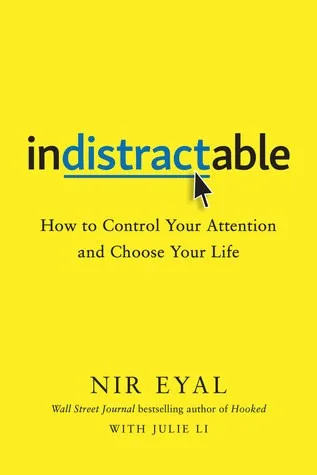
Indistractable — Nir Eyal ★★★★★
Eyal wrote Hooked first (a book about how to build habit-forming products). Then, to his credit, he wrote Indistractable about how to resist them.
What distinguishes Indistractable is the references to peer-reviewed literature throughout (what an idea!). When Eyal makes a claim about motivation, internal triggers, or the psychology of distraction, he points to research. Some of it is contested, as psychological research often is, but he's playing by the right rules by making arguments, not assertions.
The framework of managing internal triggers, making time for traction, cutting external triggers, using pacts etc. is practical, grounded, and proportionate to the length of the book. Additionally, the author uses anecdotes to provide accessible examples to the audience, then backs it up with research. Chef's kiss.
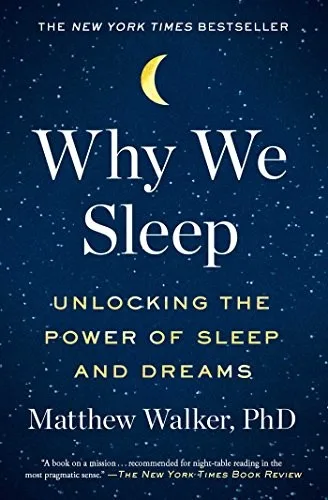
Why We Sleep — Matthew Walker ★★★★★
I have not stopped talking about this or thinking about it since I read it in August 2024. This is a must-read. Not for everyone who wants to be more productive. For everyone. We are, as a society, suffering from culturally induced chronic sleep deprivation. This book can help snap you out of it.
And it doesn't just repeatedly say "This book has the answer! Hey! Read this book!" while you're already reading the book (looking at you, the first few books in this post). It actually, you know, explains how. Specifically. Clearly. Want to lose weight? Process thoughts more clearly? Improve your memory? Reduce stress? Maximize your gains at the gym? It's literally one of the most important things we can do with our health.
Walker makes the case, with considerable force and evidence, that nearly everything you do in your waking life is affected by how much you sleep. The research he draws on is extensive, the writing is clear, and the conclusions are not softened for palatability.
The book has drawn criticism, most notably from researcher Alexey Guzey, who challenged some specific statistical claims and the framing of certain studies. Walker has partially acknowledged these critiques. The core argument, that sleep deprivation is widespread and harmful, is well-supported across the broader literature. The contested points refine the central thesis. Like, you know, how science is supposed to work.
Why We Sleep treats the reader as an adult. It shows its evidence. It makes you change your behaviour for the better.
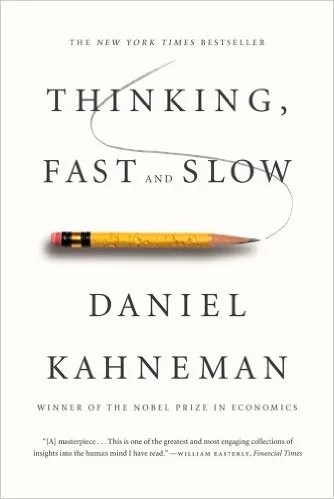
Thinking, Fast and Slow — Daniel Kahneman ★★★★★
This made me change how I think, not just what I think about. A Nobel Prize-winning researcher summarising decades of work on how human judgement and decision-making actually function. System 1 and System 2 thinking. Cognitive biases. The flaws in our intuitions, documented in experiment after experiment. He doesn't oversimplify, he doesn't pretend the research resolves cleanly into life advice: he presents what was found, what it implies, and where the limits are.
A bit of a tangent but bear with me: paired mentally with The Drunkard's Walk: How Randomness Rules Our Lives ★★★★★, these both really opened my eyes. Kahneman helps you realise how little control you have over your own thoughts and psychology; Mlodinow helps you realise how much of the universe is governed by randomness, contingency, luck, and noise. Between them, you start to see how inflated our sense of agency usually is. We tell ourselves neat stories about why things happened, why we succeeded, why we failed, why we chose what we chose, but the truth is that the story is cleaner than reality.
And that was strangely comforting to me. Not as the heroic author of everything in my life, but as a mote of dust in an absurdly large universe, subject to bias internally and randomness externally. If anything, it is something of a relief. I think it helps me feel humbler and a bit less fooled by my own narratives and more compassionate to how others experience their lives.
The dividing line
Good self-help books compare, contrast, discuss and cite their sources. Bad ones are self-referencing anecdotally bloated blog posts stretched to 300 pages.
When an author has to anchor their claims to research, a few things happen naturally: they can't overstate their conclusions without acknowledging the evidence doesn't support it, and they're forced to engage with complexity rather than wrap it up into a neat anecdote or metaphor and say "Jobs Done!" like a peon from Warcraft 3. Also importantly, the reader is given something to verify, contest, or build on.
When there are no sources the author's personal experience becomes universal truth; the anecdotes become the data; the framing becomes evidence. You end up with a book that sounds credible, has all the right words, and tells you nothing of substance.
To be clear: there's nothing wrong with personal anecdotes and lived experience in writing. They're essential for connecting with readers and grounding abstract ideas in reality. The problem is when anecdotes are presented as evidence, when personal experience is passed off as science, and when the absence of rigour is papered over with confidence. Tell me your story, absolutely. Just don't tell me it's data.
Check the bibliography first. If it's thin, or absent, that tells you something about the relationship between the author and the truth.
Common questions
Are all self-help books bad?
No. The good ones exist, but they usually show their sources, acknowledge nuance, and give you something more substantial than motivational padding.
What is your fastest way to judge one?
Check the bibliography and skim a few pages for citations or direct engagement with evidence. If the whole argument rests on personal stories and repeated slogans, that is a bad sign.
Can anecdotes still be useful?
Yes, as illustration. They become a problem when the anecdote is treated as proof that the advice is universally true.
What separates the good books you mentioned?
They make arguments instead of declarations. They cite research, explain mechanisms, and leave room for complexity instead of trying to sell certainty.