Ideas · · 6 min read
The Availability Heuristic Runs the News
We judge likelihood by how easily examples come to mind, so we fear the vivid and rare and shrug at the common and deadly. Why the news makes us afraid of the wrong things.
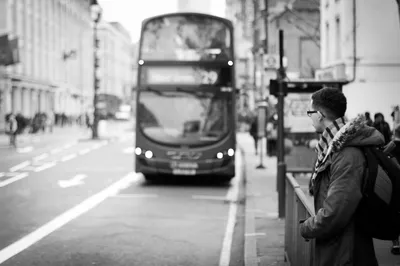
Photograph © Ken Reid
The Availability Heuristic Runs the News
The news is a list of the least representative things that happened yesterday, which you might think - great, that's interesting! The problem is, our minds calibrate to work out how dangerous the world is with this information. Quick: which is more dangerous, flying or driving? Sharks or vending machines? Terrorism or heart disease? If your gut said "flying, sharks, terrorism", your gut is confidently and dramatically wrong.
You judge how likely a thing is by how easily examples come to mind. The examples that come easily are the vivid ones, the ones the news showed you. That, in a nutshell, is the availability heuristic, and it runs your sense of risk, your politics, and a fair amount of your fear.
Quick jargon guide
- Availability heuristic: judging how likely something is by how easily examples spring to mind.
- Base rate: how often a thing actually happens, as opposed to how often you hear about it.
- Denominator: the "out of how many" under every scary number; a headline usually reports the numerator and skips this part.
- Newsworthiness filter: news reports the unusual by definition, so what reaches you is selected against being representative.
- Doomscrolling: an infinite feed of the world's most vivid catastrophes, which your gut reads as a frequency table.
The shortcut
The availability heuristic, named by Tversky and Kahneman, is the brain's habit of estimating how frequent or likely something is by how readily instances spring to mind[1]. Most of the time it's a decent shortcut: common things usually are easier to recall than rare ones, so "easy to remember" tracks "actually frequent" well enough to get you through a Tuesday.
It fails when ease of recall is driven by something other than frequency. In the modern world that is constant: vividness, emotional intensity and media coverage all make an event easier to recall without making it any more common.
So the events that dominate our sense of risk are the rare, dramatic, well-covered ones. Plane crashes get wall-to-wall coverage, and car crashes, which kill vastly more people, are too routine to report, so flying feels more dangerous while being far safer per mile.
The risks with no pictures
Shark attacks get a summer of headlines out of a handful of incidents, while the far deadlier risks (heart disease, the drive to the beach) produce no images at all. Terrorism reshapes whole societies' fears and budgets while killing a tiny fraction of the number who die of the mundane, unphotogenic causes nobody panics about. That last one makes me angry.
The mismatch between what we fear and what actually harms us is, in large part, the availability heuristic reading the news as if it were a frequency table[2].
The news is an availability machine
The news isn't lying, which is the trap. News reports the unusual by definition: "plane lands safely" is not a story, "plane crashes" is. That newsworthiness filter guarantees that what reaches you is the rare and dramatic rather than the common and deadly.

So the news stocks your memory with the vivid, atypical events that the availability heuristic will then treat as frequent ones. You get a mental sample of the world selected for drama and against representativeness, and your sense of risk is built on that sample.
This is a cousin of survivorship bias, and of the habit of analysing whatever data happened to be lying around: in all of them, a filtered sample gets mistaken for the whole picture.
Then there is doomscrolling. An infinite feed that tailors towards what you enjoy - the algorithm literally learns based on how quickly you scroll, or don't, from one item to the next, whether you comment, react, share. So when you show an interest in, well, interesting things that are, say, unusual, such as landslides, violence, politics, terrorism videos, whatever - you begin to see MORE of that because the algorithm learns what you interact with. Therefore, you start to think "this is how things are".
The same wiring that helped an ancestor remember which mushroom caused a friend to die, or where there were dangerous animals, is now allowing you to identify dangerous patterns in a carefully crafted information feed, fed to you from your phone.
What to do about a bias you can't turn off
You can't just "stop" this by knowing it exists, but you can install a correction: when you notice fear, or a judgement about risk, ask where the example came from. Did this feel likely because you have base-rate data, or because a headline handed you a picture? That one question separates "this is common" from "this is merely memorable".
The boring denominators
The deeper practice is going after base rates, the boring denominators, instead of anecdotes. How many flights per crash? How many people drive, versus how many die driving? What's the trend, rather than the latest incident?
Numbers are the antidote because they're unmoved by vividness. A statistic does not care how frightening your mental image is (notice how often journalists say "thousands" without the "out of millions"). So the frightening image is your cue to go and find the statistic.
Your intuition has been fed a curated diet of the dramatic, so when it hands you a confident sense of how risky the world is, treat the confidence as a symptom rather than a measurement.
Next time a headline frightens you, go and find the denominator. It's usually two searches away, and nowhere near as interesting as the headline.
Common questions
Doesn't this just tell people to ignore the news and real dangers?
Journalists judge success by number of viewers and interactions. They are incentivised to make news that is clickbait, sensationalised, or blatantly pandering to specific crowds. "The news" is real-world information filtered through groups of people incentivised to misbehave. I recommend at least trying various news outlets, but preferably, get your news from smaller agencies, and be deeply discerning.
If the world is safer than it feels, why does everyone feel it's getting worse?
There are a half-dozen upcoming apocalypses that are real, including climate change, antibiotic resistance, and world war. Use your time and anxiety to better the world and our chances of preventing those things, don't fret over inflated figures from pot-stirring articles complaining about immigration or gang violence - it's clickbait and it is seeding hatred against our fellow humans.
Isn't it a bit privileged to tell people their fears are irrational?
It would be, if the claim were "your fears are stupid". The heuristic is a universal shortcut with a sensible origin, not a personal failing, and plenty of the fears it produces are justified. The argument is only that ease of recall and true frequency come apart in a media-saturated world, so it pays to check which one a given fear is tracking, especially for the high-stakes calls (what to worry about, how to vote, what you will let reshape a society). Respecting people's fears and helping them aim those fears well are compatible.
References
- Tversky, A., & Kahneman, D. (1973). Availability: A heuristic for judging frequency and probability. Cognitive Psychology, 5(2), 207–232. https://doi.org/10.1016/0010-0285(73)90033-9
- Slovic, P. (1987). Perception of risk. Science, 236(4799), 280–285. https://doi.org/10.1126/science.3563507